Marriage Biodata vs Resume: What Should You Include?
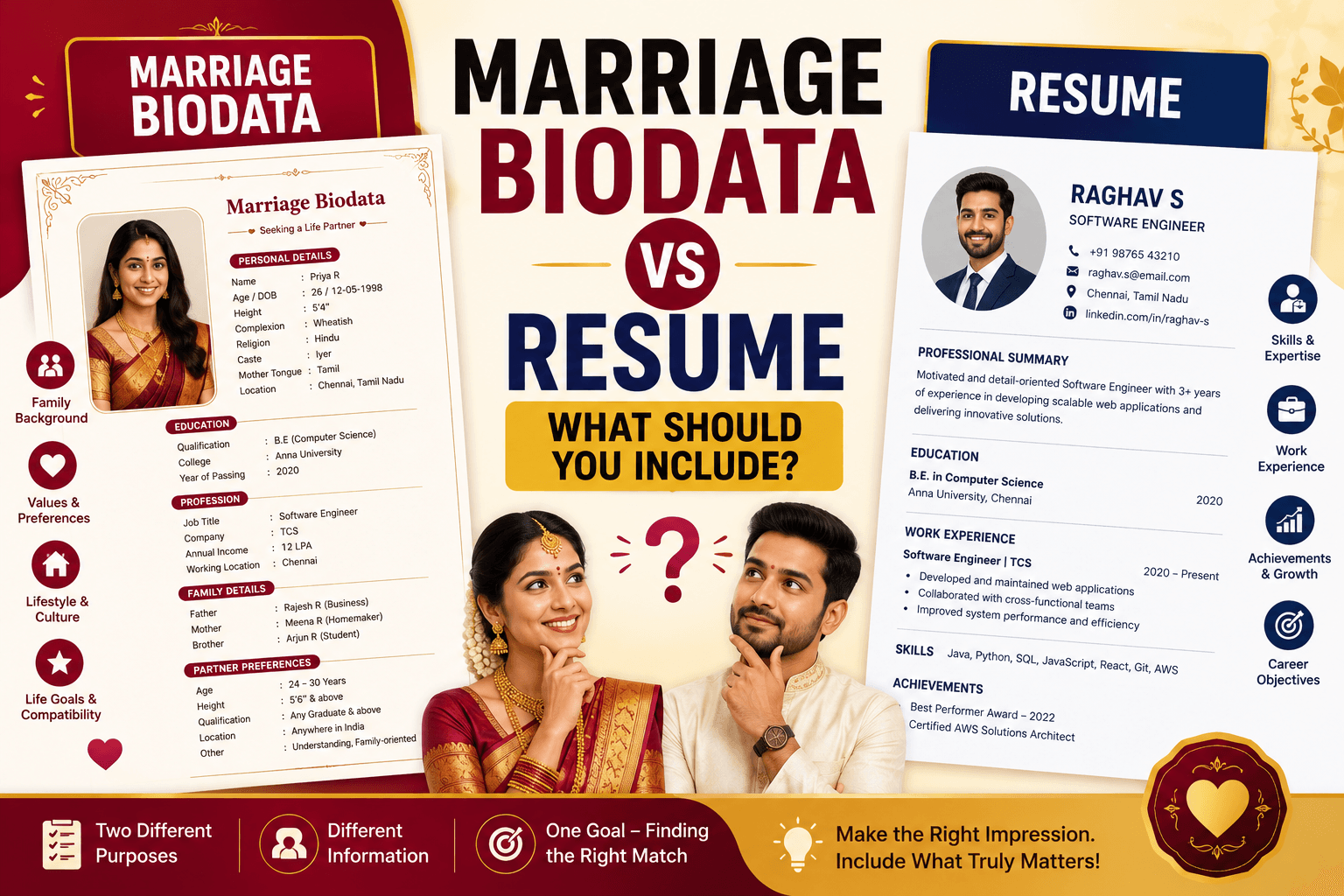
Many people creating a marriage profile for the first time often ask the same question:
"Can I simply use my resume as a marriage biodata?"
At first glance, both documents may seem similar. They contain personal details, educational qualifications, career information, and achievements. However, a marriage biodata and a professional resume serve completely different purposes.
A resume is designed to impress employers and secure job opportunities. A marriage biodata, on the other hand, is created to introduce you and your family to potential matches and help determine compatibility.
Using a job resume as a marriage biodata can make your profile feel cold, incomplete, and impersonal. In this guide, we'll explore the key differences between a marriage biodata and a resume, what information should be included, and how to create a biodata that makes a positive first impression.
What Is a Marriage Biodata?
A marriage biodata is a document that provides an overview of a person seeking marriage. It helps families and potential matches understand important details about your background, education, career, family values, lifestyle, and expectations.
Think of it as a personal introduction rather than a professional document.
The purpose of a marriage biodata is not to showcase your technical skills or work achievements. Instead, it helps others understand who you are as a person and whether you may be a compatible life partner.
A well-designed marriage biodata creates clarity, saves time, and helps start meaningful conversations.
What Is a Resume?
A resume is a professional document used during the job application process. Its primary purpose is to demonstrate your qualifications, skills, work experience, certifications, and accomplishments to potential employers.
Recruiters use resumes to evaluate whether a candidate is suitable for a particular role.
Unlike a marriage biodata, a resume focuses heavily on professional achievements and rarely includes personal or family information.
Marriage Biodata vs Resume: Understanding the Difference
Although both documents contain information about you, they are created for completely different audiences.
| Feature | Marriage Biodata | Resume |
|---|---|---|
| Purpose | Finding a life partner | Finding a job |
| Audience | Families and potential matches | Recruiters and employers |
| Family Information | Important | Not included |
| Partner Preferences | Included | Not applicable |
| Personal Details | Extensive | Limited |
| Career Information | Summary | Detailed |
| Photo | Usually included | Optional |
| Lifestyle Information | Important | Rarely included |
| Tone | Personal and warm | Professional and formal |
The biggest difference is intent.
- A recruiter wants to know whether you can perform a job effectively.
- A family wants to know whether you could be a compatible life partner.
That difference changes what information should be included.
What Should You Include in a Marriage Biodata?
A strong marriage biodata should give a complete yet concise overview of your personality, background, and values. Let's look at the essential sections.
Personal Information
This section introduces you. Keep the information accurate and up to date.
- Full Name
- Age
- Date of Birth
- Height
- Religion or Community (if relevant)
- Current City
- Marital Status
Educational Background
Education often plays an important role in the matchmaking process. There is no need to include every certification or short-term course you have completed.
- Highest Qualification
- College or University
- Major Subject
- Notable Academic Achievements (optional)
Professional Information
Career details help families understand your professional background. Unlike a resume, you don't need to include detailed job descriptions or a complete employment history. A brief overview is enough.
- Occupation
- Company Name
- Work Location
- Industry
- Income (optional based on personal preference)
Family Details
This is one of the most important sections in a marriage biodata and one that is completely missing from most resumes. Families often appreciate having a basic understanding of the environment in which a person was raised.
- Father's Name and Occupation
- Mother's Name and Occupation
- Siblings and Their Occupations
- Family Background
- Family Values
About Me Section
This section adds personality to your profile. Instead of listing facts, share a little about yourself. This gives potential matches a better sense of who you are beyond your qualifications.
"I am a software engineer currently based in Chennai. I value honesty, family relationships, and continuous learning. In my free time, I enjoy reading, traveling, and exploring new cuisines. I believe mutual respect and understanding form the foundation of a happy marriage."
Hobbies and Interests
Many successful conversations begin because people discover shared interests. These small details often make your profile more relatable.
- Reading
- Music
- Fitness
- Sports
- Travel
- Cooking
- Photography
- Volunteering
Partner Preferences
A marriage biodata should also include a brief section about the qualities you value in a partner. Keep expectations realistic and respectful. Avoid long lists of requirements that may create a negative impression.
- Family-oriented
- Educated
- Respectful
- Understanding
- Career-focused (if important)
Contact Information
Include only the contact details you are comfortable sharing. Avoid sharing sensitive personal information.
- Phone Number
- Email Address
What Should NOT Be Included in a Marriage Biodata?
Many people accidentally treat their marriage biodata like a job application. Here are some things you should avoid.
Detailed Work Experience
Families generally don't need a year-by-year breakdown of every company you've worked for. Keep career information simple and relevant.
Technical Skills
Skills like:
- Java
- Python
- Digital Marketing
- Data Analysis
- Cloud Computing
may help you get a job but usually don't add value to a marriage biodata.
Project Descriptions
Recruiters care about projects. Families usually don't. Long project descriptions only make the biodata unnecessarily lengthy.
Excessive Personal Information
Avoid sharing:
- Aadhaar Number
- PAN Card Details
- Bank Information
- Full Residential Address
Protect your privacy.
Can You Use a Resume as a Marriage Biodata?
Technically, yes. But it is not recommended.
A resume lacks many important elements required for matrimonial purposes, including:
- Family information
- Personal values
- Lifestyle details
- Partner expectations
- Relationship-focused content
As a result, it often feels impersonal and incomplete. If you're serious about creating a strong first impression, it's better to use a dedicated marriage biodata format.
Create a dedicated marriage biodata instantly
Use our affordable online biodata maker to create a polished marriage biodata in minutes with professional formatting.
Common Mistakes People Make
When creating a marriage biodata, avoid these mistakes:
- Using a corporate resume template
- Writing like a job applicant
- Including too much technical information
- Ignoring family details
- Using low-quality photographs
- Writing an overly generic introduction
- Creating a cluttered layout
A marriage biodata should feel personal, approachable, and easy to read.
Why Professional Marriage Biodata Templates Work Better
Creating biodata from scratch using Word or PowerPoint can take hours. Professionally designed Biodata templates help you:
- Save time
- Maintain a polished appearance
- Improve readability
- Create a strong first impression
- Generate a mobile-friendly PDF
Most importantly, they allow you to focus on your information rather than spending time on design.
Simple Marriage Biodata Checklist
Before sharing your biodata, ensure you have included:
Frequently Asked Questions
Is a marriage biodata the same as a resume?
No. A marriage biodata focuses on personal and family information, while a resume focuses on professional qualifications and work experience.
Can I use my CV for marriage purposes?
You can, but it is generally not recommended because it lacks important matrimonial information such as family background and partner preferences.
How many pages should a marriage biodata be?
One to two pages is usually ideal.
Should family details be included?
Yes. Family information is often considered an important part of the matchmaking process.
What is the best marriage biodata format?
A modern, clean, and professionally designed format that is easy to read on mobile devices works best in 2026.
Final Thoughts
While a marriage biodata and a resume may look similar on the surface, they serve very different purposes. A resume highlights your professional achievements, while a marriage biodata introduces you as a person, including your background, values, family, and lifestyle.
If you're creating a matrimonial profile, avoid using a generic resume template. Instead, choose a format specifically designed for marriage proposals so you can present yourself clearly and professionally.
A thoughtful marriage biodata can help create the right first impression and increase your chances of finding a compatible life partner.
Create your marriage biodata effortlessly
Use our affordable online biodata maker to create a polished marriage biodata in minutes with professional formatting.