Muslim Marriage Biodata Format
A Muslim marriage biodata (for Nikah) requires a balance of professional, personal, and religious details. Mentioning your Maslak, prayer habits, and family background clearly helps find a compatible match with similar values. Here is what to include and how to make a beautiful PDF profile. Try our biodata maker when you're ready.
Religious Practices and Values
For Muslim families, lifestyle and religious values are central to compatibility. It's standard to mention how frequently you pray, whether you observe fasting during Ramadan, and details about your Maslak (sect/belief system) to ensure alignment.
Sect and Community (Maslak & Biradari)
Being clear about your sect (Sunni, Shia) and Maslak (Deobandi, Barelvi, Ahl-e-Hadith, etc.) is highly recommended to avoid mismatches. Additionally, mentioning your community (Pathan, Syed, Sheikh, etc.) is often expected by parents reading the profile.
What to Include in a Muslim Biodata
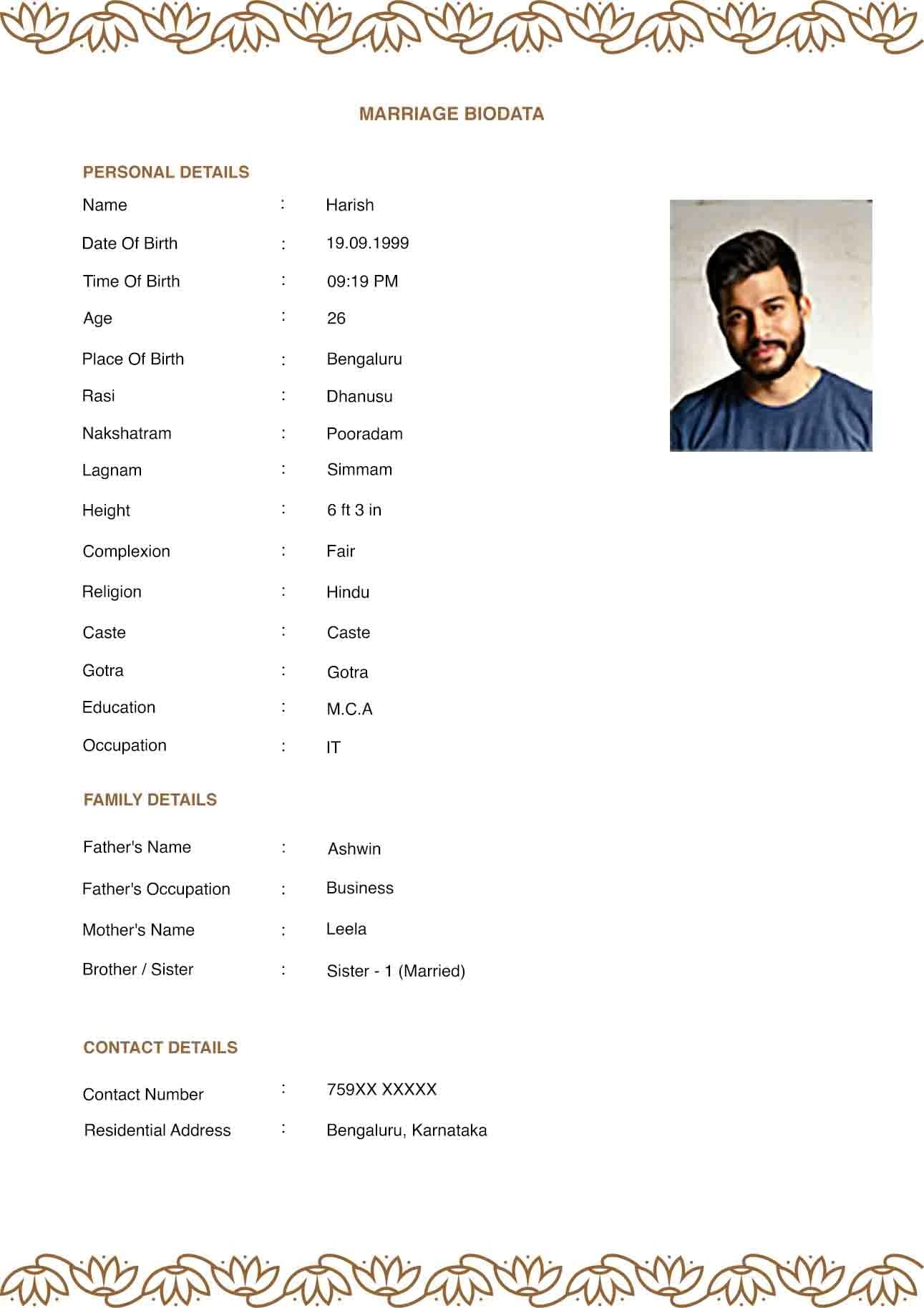
- Personal Info: Full Name, Age, Height, Marital Status, and Complexion.
- Religious Details: Sect, Maslak, Caste/Biradari, Prayer Habits (e.g., prays 5 times a day), and Dietary preferences (Halal).
- Education & Career: Qualifications, Job Title, Company, and Income.
- Family Background: Father and Mother's name and occupation, Siblings, and Native Place.
- Contact Info: Parents' contact number and address.
Muslim Biodata Frequently Asked Questions
Do I need to include a photo for a Muslim biodata?
Most families expect a clear photo for initial consideration. However, some families who observe strict Hijab/Niqab prefer not to attach photos on a digital document and share them privately. You can choose to skip the photo field in our builder if you prefer.
Should I mention if I wear Hijab/Niqab or keep a beard?
Yes, it's highly recommended. Being upfront about your lifestyle, including observing Hijab/Niqab or keeping a Sunnah beard, helps find a spouse who respects or shares those choices.